Why visit Dougga
Why visit Dougga
The Roman town that escaped the bulldozer
Most Roman cities in North Africa were built over, quarried for stone, or absorbed into modern towns. Dougga wasn't — its countryside hilltop location meant it was simply left alone, so what survives is a genuine ancient townscape rather than a handful of isolated monuments. UNESCO named it the best-preserved Roman small town in North Africa when it listed the site in 1997.
A skyline of temples and theatre
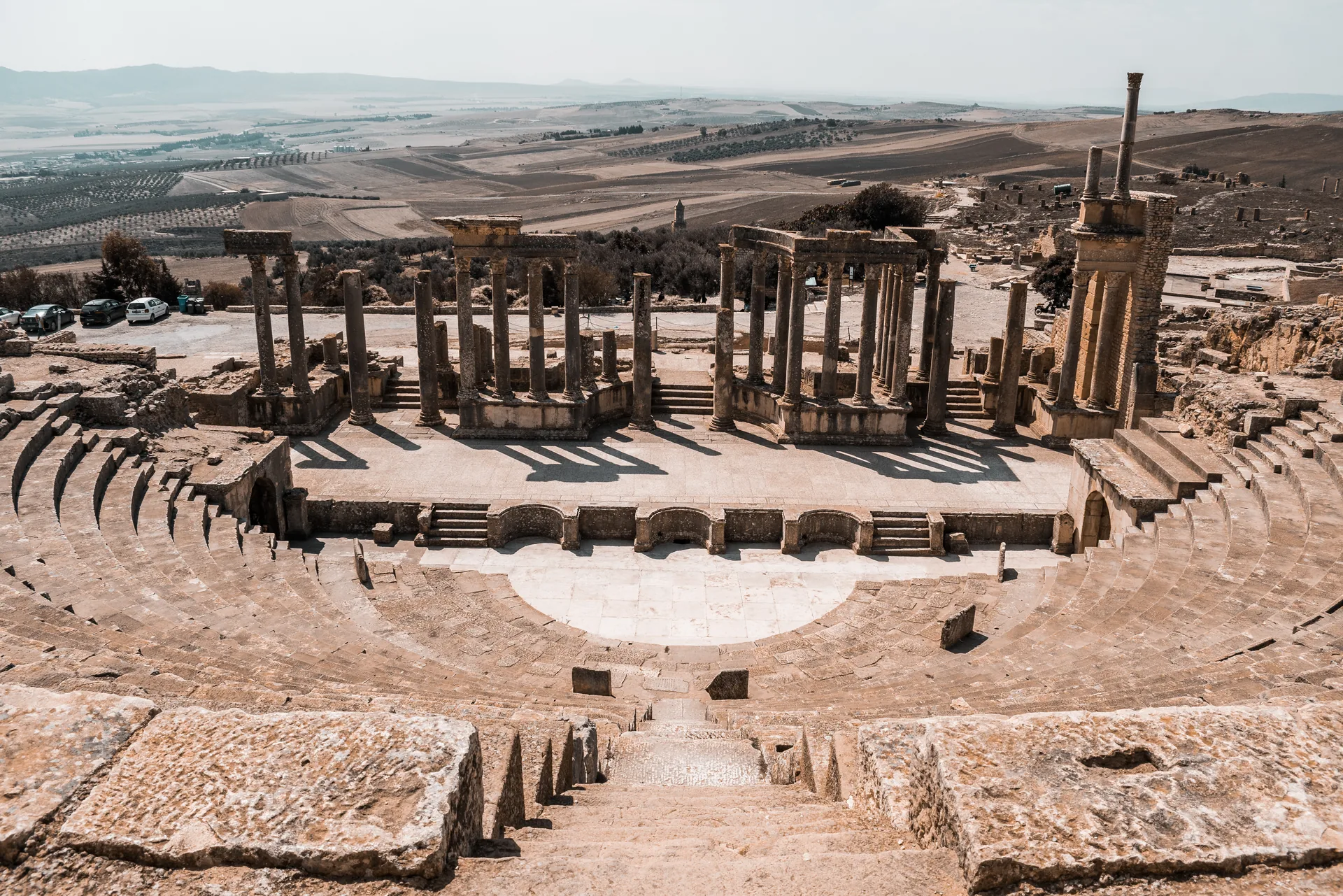
The Capitol, a 2nd-century temple to Rome's protective triad, still commands the hilltop much as it did 1,800 years ago. Just below it, a 3,500-seat theatre — built for a town of only around 5,000 people — shows how much civic pride a small provincial city could invest in its public buildings.
Layers of history in one place
Dougga began as a Numidian-Berber settlement in the 6th century BC, absorbed Punic influence, then grew under Rome into a full municipality and later a colony. Walking its streets, you pass through baths, a market, private houses and a Libyco-Punic mausoleum — a full cross-section of ancient North African life, not just Rome's.
What to see at Dougga
What to see at Dougga
Dougga's 75 hectares reward a proper walk across the hilltop. These are the things to look for as you go.
- The Capitol
The temple on the hill
Dougga's most photographed monument: a 2nd-century temple dedicated to Jupiter, Juno and Minerva, its columned portico still standing above the town.
- The theatre
3,500 seats for a small town
Built around AD 168-169, the theatre's scale — far larger than Dougga's population needed — speaks to the civic ambition of a wealthy provincial elite.
- The forum
A modest civic heart
At just 924 square metres, Dougga's forum is small by Roman standards, but its position and surrounding buildings still convey the working centre of the town.
- Licinian Baths
3rd-century bathhouse
One of the best-preserved bath complexes on the site, with intact walls and even slave tunnels beneath — the plumbing of Roman daily life laid bare.
- The market
Shops and porticos
Dougga's mid-1st-century market square, ringed with porticos and shop stalls, shows the commercial life that supported the town's temples and public buildings.
- Libyco-Punic mausoleum
Pre-Roman roots
A striking funerary monument predating the Roman period, a reminder that Dougga's story starts centuries before Rome arrived — with its Numidian-Berber and Punic origins.
The day trip from Tunis
The day trip from Tunis
Dougga sits on a rural hilltop, so almost everyone visits on a guided day trip from Tunis — here's how it works.
A half-day drive from Tunis
Dougga is roughly two hours from Tunis, so day trips run as a full day out — most are combined with nearby Bulla Regia (about 45 minutes further) to make the drive worthwhile.
Usually paired with Bulla Regia
The best-rated tours bundle Dougga's hilltop Roman town with Bulla Regia's unique underground villas — two very different sites in one trip, often via the scenic Andalusian town of Testour.
What tours include
Day trips generally bundle round-trip transport from Tunis or Hammamet, a guide, and entrance fees; many add a traditional lunch. Check exactly what your chosen option includes when you book.
On site
You'll walk across open hilltop ground with little shade, so wear sturdy shoes, bring water and sun protection, and go early if you can — there's a lot of ground to cover.
Dougga, in pictures
Dougga, in pictures
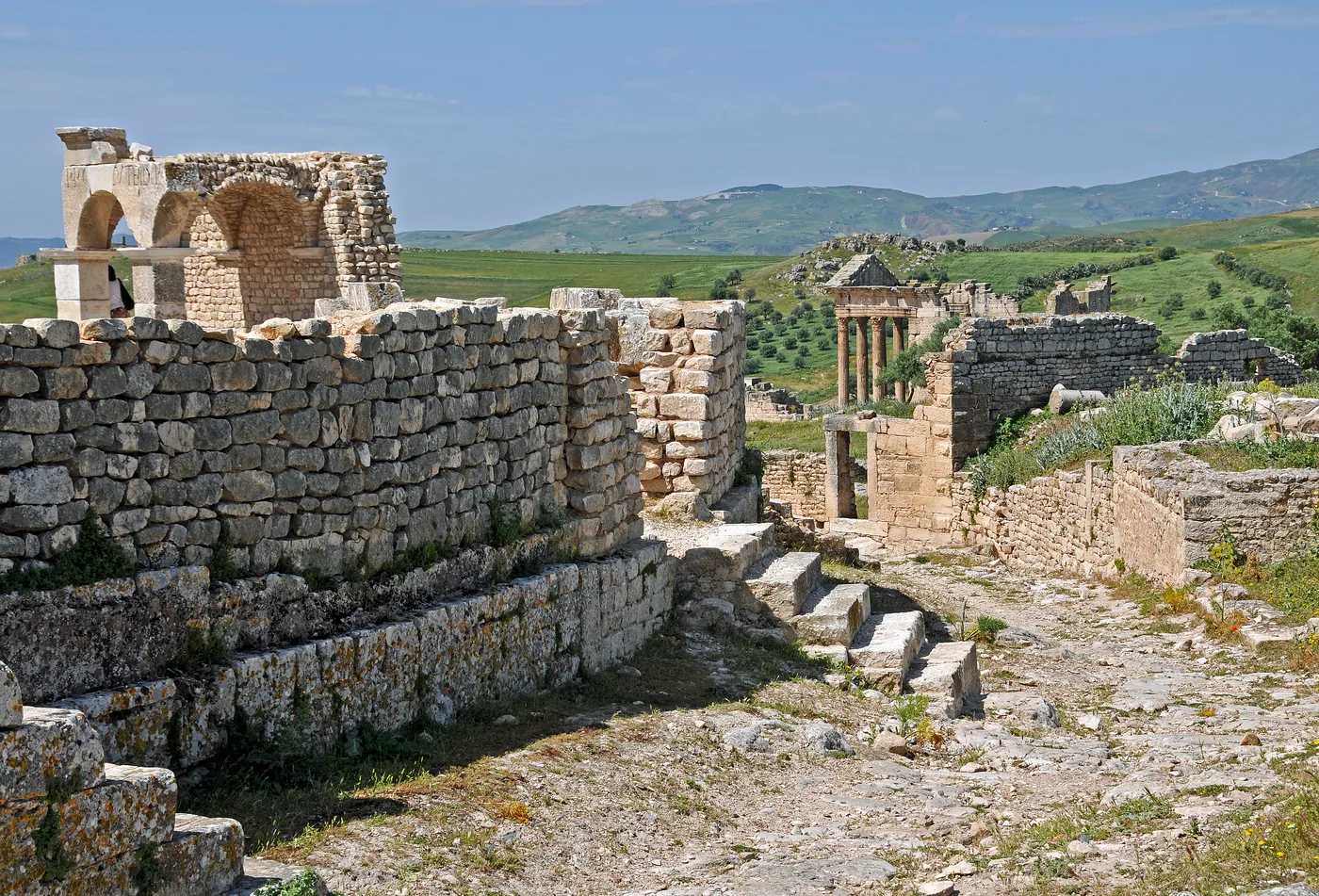
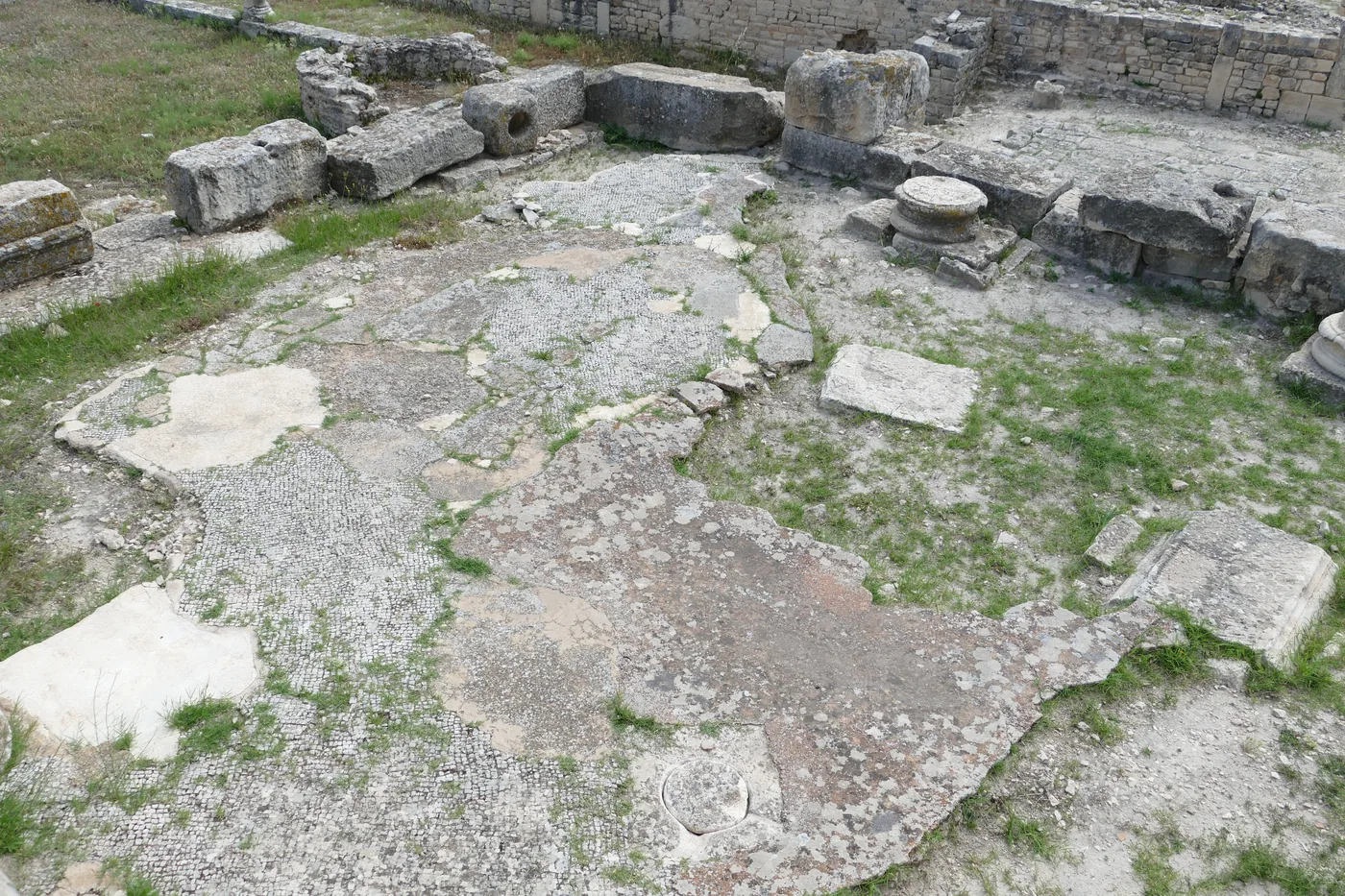
The Capitol, theatre and streets of Dougga, North Africa's best-preserved Roman town.
Tour options & what's included
Tour options & what's included
| Option | What it includes | Good to know |
|---|---|---|
| Private Dougga + Bulla Regia tour | Transport, guide, entrances, private vehicle | The top-rated, most popular way to see both sites |
| VIP day tour via Testour | Adds the Andalusian town of Testour, pickup included | A fuller day with more stops |
| Tour + lunch | Adds a traditional lunch at Dougga | Good if you want the day fully organised |
| Kairouan, Makthar & Dougga | A longer Roman & Islamic heritage day | For travellers wanting more of inland Tunisia |
Ways to visit Dougga
Find a Dougga tour for your dates
Every option below is bookable through GetYourGuide, with live availability and the final price shown in your own currency before you pay.
Planning your visit
Planning your visit
Go early
Dougga has little shade across its 75 hectares — an early start beats the heat and gives you time to properly cover the Capitol, theatre and outlying ruins.
Pair it with Bulla Regia
The strongest-rated tours combine Dougga's hilltop town with Bulla Regia's underground villas, about 45 minutes further — two very different Roman sites in one day.
Wear sturdy shoes
The site is a genuine hilltop town, not a flat monument — expect uneven stone streets and inclines, so comfortable walking shoes matter.
Go with a guide
Dougga's 75 hectares span Numidian, Punic, Roman and Byzantine layers; a guide connects the Capitol, theatre, baths and mausoleum into one coherent story rather than a scattered ruin field.
Booking flexibility
Listings typically offer free cancellation up to 24 hours before, so you can lock in a departure and adjust later if your Tunis plans change.
Planning a Dougga day from Tunis
Planning a Dougga day from Tunis
GEO/FAQ
Dougga visit questions
What is Dougga?
Dougga (ancient Thugga) is a Roman archaeological site on a hilltop near Téboursouk, Tunisia — UNESCO-listed since 1997 as the best-preserved Roman small town in North Africa. It began as a Numidian-Berber settlement in the 6th century BC, absorbed Punic influence, and grew under Rome into a municipality (AD 205) and later a colony (AD 261). Its 75 hectares include a Capitol temple, a 3,500-seat theatre, a forum, baths, a market and a Libyco-Punic mausoleum.
How do I get there from Tunis?
Dougga is about two hours from Tunis. There's no simple public-transport route for visitors, so almost everyone goes on a guided day trip, most often combined with Bulla Regia, about 45 minutes further along the same route.
Is it worth the day trip?
If you're interested in Roman history, yes — Dougga is widely considered North Africa's best-preserved Roman town, with an intact streetscape rather than isolated monuments. Pairing it with Bulla Regia's underground villas makes for a genuinely varied day.
What will I see there?
The highlights are the Capitol temple on the hilltop, the 3,500-seat theatre, the forum, the Licinian Baths, the market, and a Libyco-Punic mausoleum that predates the Roman period. The site covers 75 hectares of genuine ancient streets.
How should I prepare?
Wear sturdy shoes for uneven hilltop terrain, bring water and sun protection — there's little shade — and go early if you can, since there's a lot of ground to cover across the site.
Can I combine Dougga with other sites?
Yes — the most popular bookable tours combine Dougga with Bulla Regia, and some longer options add the Andalusian town of Testour or the Islamic heritage sites of Kairouan and Makthar. Each option's inclusions and live price are shown in the booking widget.
Still deciding which Dougga tour, or which day?
Leave your email and roughly when you're travelling — we'll send a short rundown of how the Dougga day trips from Tunis compare and what's included.